
Trace Cherokee County Former Owners by Record Era
Every backward chain in Cherokee County property records begins with the Cherokee Probate Records index. Its live configuration sets different starting dates by record type. Older deed records sit at the courthouse and in outside archive collections.
| Source | Years It Covers | Where Held | What It Shows |
|---|---|---|---|
| Online deed index | June 25, 1978 forward | Cherokee Probate | Grantor, grantee, instrument and recording reference |
| Online plat index | January 1, 1923 forward | Cherokee Probate | Subdivision, lots, book, slide and amendments |
| Deed books and microfilm | Earlier, collection-specific runs | Probate and ADAH | Earlier conveyances and book images |
| Probate and local collections | Varies by source | Library, archives and FamilySearch | Estate, identity and historic-property clues |
A modern chain starts online. If a source-of-title citation reaches before the online cutoff, carry that exact book and page to the Probate counter or to the ADAH county microfilm catalog.
Build a Cherokee County Former-Owner Timeline
Log each verified transfer as a row. Record the transfer date, grantor to grantee, deed type, and book/page or document number. The current deed's source-of-title clause often points to the prior instrument, and matching the land description matters more than matching a repeated surname.
| Transfer point | Grantor to grantee | Instrument | Recorded locator |
|---|---|---|---|
| Newest deed | Seller to present grantee | Recorded deed type | Book/document, pages and date |
| Earlier acquisition | Prior grantor to that seller | Warranty, quitclaim or other deed | Matching source citation |
| Next link | Repeat for the same land | Estate, corrective or ordinary transfer | Verified older reference |
Try Cherokee Probate's Historic Deed Labels
The portal configuration keeps hundreds of real historic labels. These include “Administrators Deed,” “Judgement,” and “Tax Lein.” Misspellings were never corrected. Search the broad deed or all-books categories, and try initials, spelling variants, and entity punctuation. A former owner often hides behind one of these quirks. The owner may seem absent from a narrow query. The official Cherokee Probate search screen shows where the record categories and party-name criteria are selected.
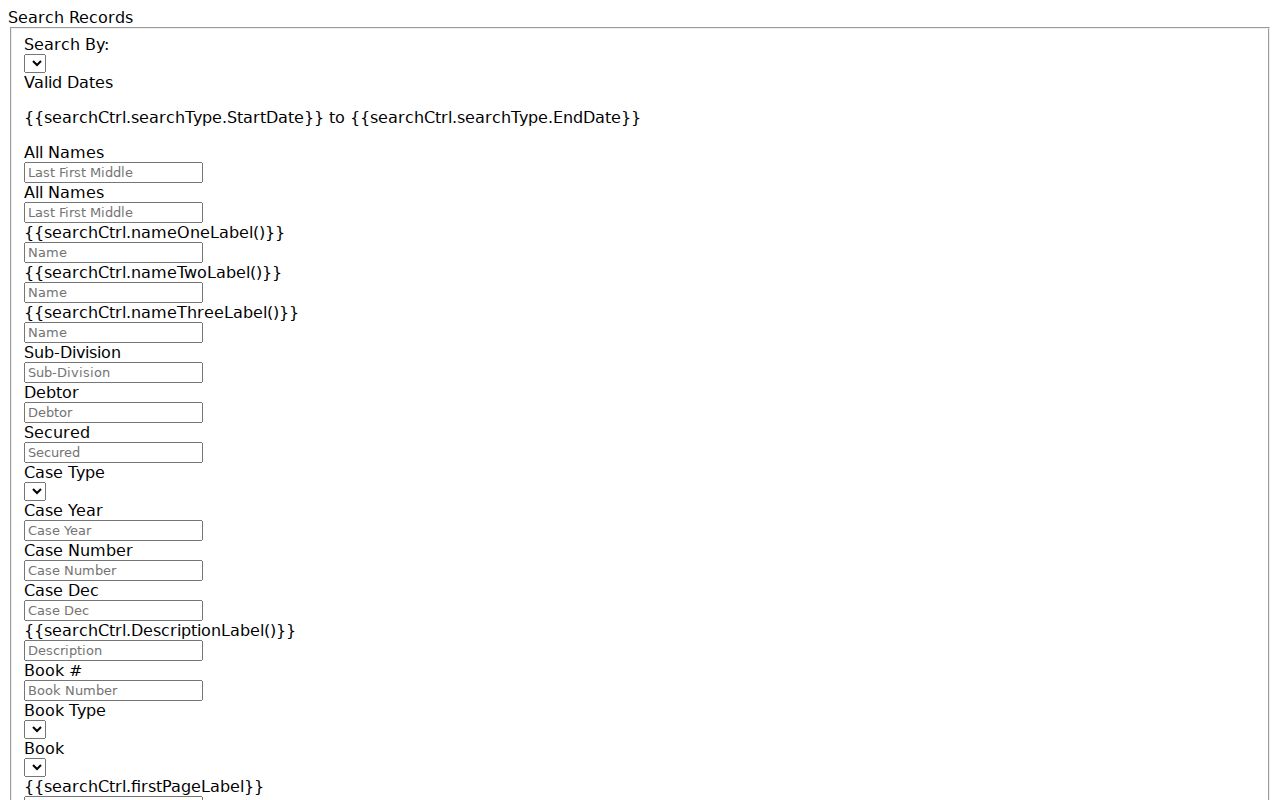
That screen is an index entry point only. Confirm the current portal and obtain the underlying instrument before placing anyone in the ownership chain.
Note: Keep the portal's exact spelling in research notes so another person can reproduce the same result.
Walk the Cherokee County Deed Chain Backward
Work one conveyance at a time, reversing the party roles as you go. Carry the legal description and source reference through every single search.
- Find the present owner's acquisition deed with that owner as grantee.
- Read the seller as grantor and copy the source-of-title and land description.
- Search that seller as an earlier grantee and compare the same parcel clues.
- Repeat until the online cutoff, then continue in books or microfilm.
- Grantor
- The party conveying a recorded interest.
- Grantee
- The party receiving that interest.
- Chain of title
- The linked sequence of transfers affecting the same land.
- Legal description
- The land description that survives address and parcel-number changes.
Reconstruct Cherokee County Owners Across Two Fires
Cherokee County lost courthouses to fire twice. The official ADAH list records fires in 1882 and 1895. That is why a nineteenth-century ownership chain can require several sources. It does not mean every early record vanished.
Use the surviving books, later source-of-title clauses, probate minutes, and tax lists. The FamilySearch Alabama wills and deeds can supply another link in the chain. The Cherokee County Library genealogy department can help with newspapers, census records, and family histories. Those sources often separate same-name people. A deed or probate order still remains the title bridge.
Bridge Cherokee County Estate and Probate Transfers
A death can break the simple buyer-seller pattern in the deed records. Search for a will, estate, administrator, executor, or personal representative, then locate any executor's deed, personal representative deed, or court-authorized sale. An obituary can identify heirs, but it never transfers the property itself.
Follow Cherokee County Parcels That Split or Retired
The GIS schema includes PreviousOwner, Created By Record, and Retired By Record. Those fields flag a split, merge, or correction. Search the successor parcel, the recorded plat, and any corrective deed or amendment. Keep the legal description aligned throughout. Remember that a tax-history prior owner is a clue, not a proven chain link.
Use Cherokee County Plats to Hold the Former-Owner Chain Together
Street addresses change. A recorded subdivision, lot, and block stay stable. That stability makes plats the best way to hold a former-owner chain together in Cherokee County. The Probate plat result shows the book, document number, subdivision, instrument, number of lots, pages, recorded date, and slide. Revenue adds subdivision code, name, lot, block, type, book, page, and section-township-range fields. Match those values whenever the deed description is abbreviated.
Search amendments, restricted covenants, surveys, annexations, vacations, and corrections when a parcel's shape or identifier changes. Cedar Bluff's subdivision procedure shows the local handoff. Municipal approval comes before the final plat is filed in Cherokee Probate. The county filing, not an unfinished planning file, is the record that connects later lot deeds.
Request Older Cherokee County Ownership Material
The Probate counter and vault are the first fallback for any cited older book. ADAH's Research Room and county microfilm catalog extend the search when local online coverage stops. Its research-request service handles limited source requests for a published fee and turnaround. An in-person researcher can consult microfilm and finding aids. Verify current terms before ordering.
The Cherokee County Library offers genealogy and county-history materials, FamilySearch access, scanning, and copying. Ask staff about newspapers, obituaries, cemetery books, family histories, and historic street names. These sources help distinguish former owners or explain an estate. Cite them as context only. A deed closes the link. So does a patent, probate order, or other transfer record.
Move from Cherokee County Deeds Toward Original Land Records
When a chain reaches beyond surviving county books, the Alabama Secretary of State's land-record inquiry offers help. It provides name routes and township-range-section routes. The 322-page Family Maps of Cherokee County catalog entry can orient a historic owner search. It works within township and range.
Treat those maps as research aids, never as current title or survey evidence. Bring every result back to the recorded legal description. Match it against the current plat and the surviving county conveyances. If a gap remains, label it rather than implying an unbroken former-owner chain.
Keep a Reproducible Cherokee County Former-Owner Log
Log every previous owner with the exact indexed name and the role shown. Add the instrument type, the recording date, and the book or document number with pages. Note the legal-description match too. A link may rest only on tax history, a GIS PreviousOwner field, an obituary, or a newspaper notice. Say so plainly. Another researcher can then tell recorded transfers from leads that still need proof.
Save the rejected same-name results as well. A one-line reason, such as a different subdivision, acreage, or spouse, keeps the same false trail from creeping back later. Break that reason out. It keeps the same false trail from returning later. The aim is a documented chain tied to one parcel. A longer list of names proves nothing by itself.
Recognize Cherokee County Deeds That Change the Chain
The portal's instrument list can hold warranty deeds, quitclaim deeds, executor's deeds, and personal representative deeds. It also lists sheriff's deeds, foreclosure deeds, tax deeds, trustee deeds, corrective deeds, and right-of-way deeds. Not every deed conveys the whole fee interest. Read the parties, the granting language, and the legal description before deciding.
Each type tells its own story. A corrective deed may fix a name or description. It points back to an earlier transfer. A quitclaim passes along only the interest the grantor held, without a warranty deed's promises. Executor and personal representative deeds come from estate administration. Sheriff and foreclosure deeds signal a court or enforcement trail worth tracing on its own.
Use Cherokee County History to Test an Older Chain
Cherokee County dates to 1836. The county seat moved from the Cedar Bluff area to Centre during the nineteenth century. Older instruments often describe land by metes and bounds. They also use township and range, watercourses, roads, or adjoining owners rather than a modern street address. The Weiss Lake setting, along with the Coosa, Chattooga, and Little River, makes shoreline and flood-right conveyances relevant too.
Historical context aids interpretation. Still, do not project modern geography backward without evidence. Compare monuments and adjoining owners across successive deeds. Then test the result against surviving plats and current parcel context.
Audit the Cherokee County Former-Owner Chain
Before calling the timeline complete, confirm that every grantee later appears as a grantor, or that an estate, foreclosure, court order, or entity event explains the change. Check that acreage and legal descriptions stay compatible. Flag the gaps. Flag uncertain name matches and missing images. This final pass stops a tax-history clue or family-history source from being promoted into an unsupported transfer.
Keep contextual sources attached to the link they explain. A newspaper sale notice, an obituary, or a census entry can separate people and dates. The deed, patent, or probate order still carries the ownership change itself.
Know How Far Cherokee County Former-Owner Records Reach
How far back you can go depends on the source and its survival. The online deed index reaches 1978, and the plat index reaches 1923. Older deed books and microfilm vary. For a hard chain, ask the Probate Office. Then turn to ADAH, FamilySearch, and the Cherokee County Library. Preserve gaps rather than filling them with guesses.
Lawful use. Former-owner research supports house history, estate work and property diligence. Never use it to track, target or harass a living person.